The Future of Education: How Technology Is Transforming Learning in 2025
From AI copilots to immersive simulations, education in 2025 blends human teaching with powerful, data-informed tools to improve access, engagement, and outcomes.
The Shift: Human + Machine
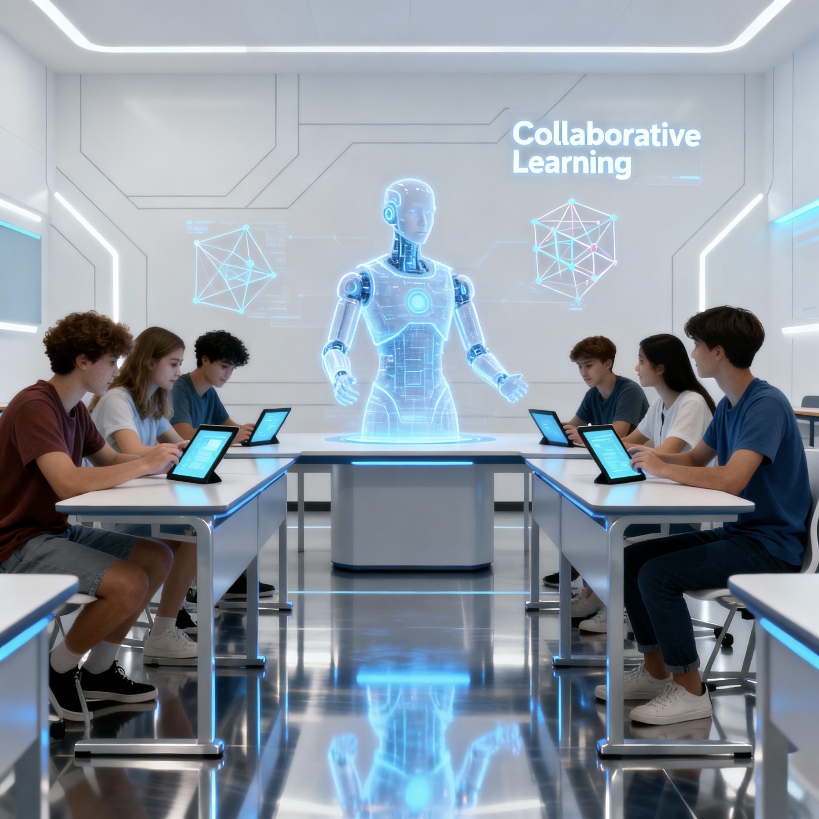
In 2025, classrooms increasingly operate as human‑centered environments augmented by intelligent tools: teachers lead pedagogy and culture while AI scaffolds practice, feedback, and personalization. This division of labor frees educators to focus on higher‑order teaching—coaching, inquiry, and relationships—while software handles routine tutoring and assessment. The result is a more responsive learning experience that adapts to each student without losing the warmth and judgment only teachers provide.
AI Tutors and Copilots
AI tutors now deliver step‑by‑step guidance, instant feedback, and worked examples across subjects, adjusting difficulty based on a student’s responses. Classroom “copilots” assist teachers by generating differentiated practice sets, rubrics, and formative questions, reducing prep time and enabling more targeted small‑group instruction. Crucially, schools implement guardrails—explanations over answers, citation prompts, and academic integrity checks—to turn AI into a learning accelerator rather than a shortcut.
Adaptive and Mastery‑Based Learning
Adaptive platforms map skills into granular learning objectives, diagnose gaps quickly, and personalize practice until mastery is demonstrated. Instead of averaging grades across attempts, mastery models prioritize evidence of proficiency, allowing students to progress when ready and revisit concepts without stigma. This approach raises floor performance and creates clearer pathways for both remediation and acceleration.
AR/VR and Simulation‑Driven Learning
Augmented and virtual reality bring abstract ideas to life—students can manipulate molecules at scale, walk ancient cities, or practice lab procedures safely. Lightweight headsets and browser‑based 3D experiences lower costs while lesson libraries grow across science, history, health, and career‑technical education. Simulations improve transfer by letting learners apply knowledge in realistic scenarios before facing real‑world stakes.
Assessment: From Moments to Streams
Assessment is shifting from periodic high‑stakes tests to continuous, low‑stakes evidence captured through practice, projects, and simulations. Automated feedback highlights misconceptions immediately, while dashboards help teachers spot patterns and intervene earlier. Capstone projects and portfolios complement analytics to demonstrate depth, creativity, and real‑world application beyond multiple‑choice scores.
Data, Privacy, and Equity
As learning analytics expand, districts adopt clear data governance, minimal‑necessary collection, and transparent model documentation to protect students. Accessibility features—multilingual captions, text‑to‑speech, dyslexia‑friendly formatting—are now standard, improving inclusion for diverse learners. Equity work centers on closing device, bandwidth, and support gaps so that personalization benefits every student, not only those with more resources.
Micro‑Credentials and Skills Pathways
Short, verifiable credentials aligned to industry frameworks help learners showcase specific competencies—data literacy, UX basics, cloud fundamentals—alongside traditional degrees. Stacked micro‑credentials create modular pathways from high school through workforce upskilling, making learning more flexible and career‑relevant. Institutions partner with employers to align assessments with real task performance rather than only theoretical knowledge.
Hybrid Learning as Default
Blended schedules combine in‑person collaboration with asynchronous digital practice to maximize time-on-task and flexibility. Learning management systems serve as the course backbone—hosting content, discussions, auto‑graded checks, and analytics—so students can catch up or advance without losing continuity. Community norms around cameras, participation, and timeboxing protect focus and maintain a healthy classroom culture online.
Teacher Workflows and Wellbeing
Educators increasingly use planning assistants to build unit outlines, align standards, draft exemplars, and differentiate tasks for varied reading levels. Automated grading of low‑stakes work and rubric‑guided feedback saves hours weekly, enabling more 1:1 conferencing and feedback on higher‑order tasks. Professional development emphasizes AI literacy, prompt design, and ethics so teachers stay in control of tools, not the other way around.
Parent and Learner Dashboards
Streamlined dashboards summarize progress, missing work, and upcoming goals in plain language with actionable next steps. Notification settings reduce noise by batching updates and flagging only meaningful changes, such as concept mastery or risk alerts. Families gain a clearer window into learning without the overwhelm of constant micro‑notifications.
STEM, Humanities, and the Arts
In STEM, intelligent problem generators vary numbers and contexts to deepen conceptual understanding, while code copilots help students debug and explain their logic. In the humanities and arts, generative tools support brainstorming, drafting, language practice, and multimedia composition—paired with transparent attribution to model ethical creation. Cross‑disciplinary projects flourish as students weave writing, data, and design into integrated artifacts.
Responsible Use and Academic Integrity
Schools codify clear guidelines: disclose AI assistance, require process artifacts (notes, outlines, drafts), and emphasize reasoning over polished output. Plagiarism checks expand to include style drift and source verification, while assignments shift toward oral defenses, live problem‑solving, and applied projects. Teaching integrity proactively turns emerging tools into opportunities to learn critical thinking, not shortcuts to bypass it.
Budgeting for Impact
Districts prioritize investments with measurable outcomes—early‑literacy tutors, math mastery platforms, and teacher workflow tools—over flashy but underused products. Pilot‑then‑scale approaches, clear success metrics, and teacher voice in selection prevent shelfware. Total cost of ownership, including device management and training, informs sustainable rollouts.
How Students Can Thrive Now
- Use AI for practice, explanation, and feedback—never to skip the thinking. Keep a learning journal of prompts and takeaways.
- Adopt spaced repetition and active recall with digital flashcards; track progress and error types.
- Join project‑based communities or competitions to build portfolios that showcase real skills.
- Balance screen time with deliberate offline study to strengthen deep focus and memory.
How Educators Can Lead
- Co‑design AI‑enhanced lessons: define learning targets, guardrails, and evidence of thinking up front.
- Collect light‑touch data weekly to adjust grouping, supports, and challenge levels.
- Model digital citizenship: citation norms, bias checks, and reflective tool use.
- Share templates and exemplars across teams to reduce prep time and raise consistency.
Looking Ahead
The next horizon pairs intelligent tutoring with richer multimodal interfaces—speech, ink, diagrams, and simulations that “understand” student reasoning. As interoperability standards mature, learning records will travel with students to personalize support across schools and programs. The core promise remains the same: amplify great teaching and expand opportunity for every learner.