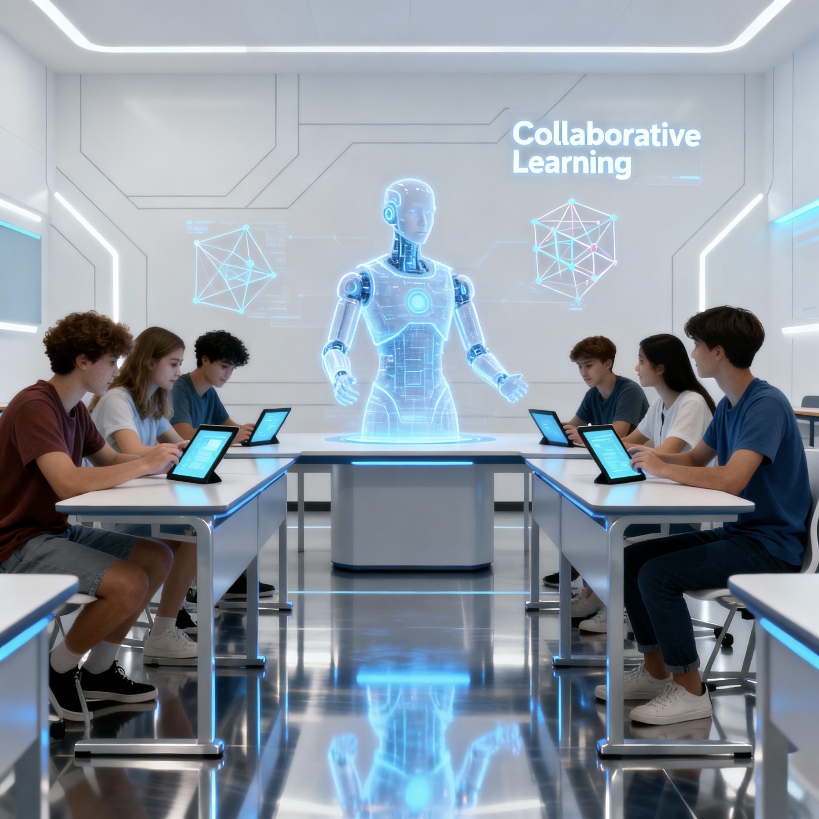
The Future of Education: How Technology Is Transforming Learning in 2025
Education has always been the foundation of human progress. From chalkboards to smart boards, and from traditional classrooms to virtual learning spaces, the way we learn has continuously evolved. As we move further into 2025, technology is no longer just a supportive tool in education—it has become the driving force that reshapes how students and teachers interact, how knowledge is delivered, and how skills are developed for the future.
This article explores how technology is transforming education in 2025, the opportunities it creates, the challenges it brings, and what the future of learning might look like.
1. The Rise of Digital Classrooms
The concept of a classroom has expanded far beyond four walls. In 2025, digital classrooms are a common reality. Platforms that integrate video conferencing, interactive tools, and AI-based learning assistants allow students to join lessons from anywhere in the world.
Teachers can share presentations, conduct quizzes in real-time, and even use virtual whiteboards to make classes more engaging. Students, in turn, benefit from accessibility—whether they are in urban cities or rural communities. This digital shift has opened doors for millions who previously lacked access to quality education.
SEO Keywords to note: digital classroom, online learning, remote education, virtual classroom.
2. Artificial Intelligence in Education
Artificial Intelligence (AI) has become one of the most powerful tools in modern education. In 2025, AI is not just about grading assignments faster—it is about personalizing the learning experience for every student.
AI algorithms can analyze student performance, identify strengths and weaknesses, and recommend tailored learning materials. For instance, if a student struggles with mathematics but excels in language, AI-powered platforms adjust lesson plans accordingly.
Chatbots powered by AI also serve as round-the-clock tutors, answering questions, providing explanations, and offering feedback instantly. This helps reduce the dependency on one-on-one teacher time while ensuring students still get the support they need.
3. Virtual Reality (VR) and Augmented Reality (AR) Learning
One of the most exciting advancements in 2025 is the integration of VR and AR in education. These immersive technologies create engaging experiences that make learning more practical and memorable.
- Virtual Reality (VR): Students can explore the solar system, dive into the deep ocean, or walk through historical events as if they were actually there.
- Augmented Reality (AR): AR apps bring textbook diagrams to life. For example, students can point their devices at a biology textbook and see a 3D model of the human heart beating in real time.
This immersive learning method makes difficult subjects easier to understand while sparking curiosity and creativity among learners.
4. The Growth of Online and Hybrid Learning
The global pandemic of the early 2020s made online learning a necessity. By 2025, it has become a choice—and a powerful one. Many universities, colleges, and schools now offer hybrid learning models, where students can choose to attend classes online, in person, or through a mix of both.
This flexibility allows learners to balance studies with work, family, or personal commitments. Online platforms also host massive open online courses (MOOCs), making education more affordable and accessible to people across the globe.
5. Gamification and Interactive Learning
Education in 2025 has become more interactive than ever before. Gamification—the use of game-like elements in learning—has gained huge popularity. Students now earn points, unlock badges, and compete in quizzes, making learning feel less like a chore and more like an adventure.
Interactive learning apps use challenges, leaderboards, and rewards to boost motivation. For example, language-learning apps encourage daily practice by tracking progress and rewarding consistency. This approach makes education fun while keeping students actively engaged.
6. The Role of Blockchain in Education
Blockchain technology is often associated with cryptocurrencies, but in 2025, it is playing a vital role in education too. Universities and institutions now use blockchain to store academic records, certificates, and credentials securely.
This ensures transparency, prevents fraud, and makes it easier for students to share verified qualifications with employers. Additionally, micro-credentialing—small, skill-based certifications—is becoming popular, allowing learners to showcase specific competencies in areas like coding, digital marketing, or project management.
7. Lifelong Learning and Skill Development
The job market in 2025 demands constant upskilling. Traditional education alone is no longer enough—people must continue learning throughout their careers. Technology has made lifelong learning more achievable by offering short courses, online certifications, and interactive training programs.
Employees can now learn new skills from global experts without leaving their homes. This democratization of knowledge helps bridge the gap between education and industry needs, preparing learners for the evolving workplace.
8. Accessibility and Inclusion in Education
One of the greatest achievements of technology in 2025 is its role in making education more inclusive. Assistive technologies such as speech-to-text, text-to-speech, and screen readers support students with disabilities. AI translation tools allow students to learn in their native languages, removing language barriers.
For learners in remote or underserved regions, mobile learning apps provide access to quality resources without needing high-cost infrastructure. This inclusivity ensures that no learner is left behind.
9. Challenges of Technology in Education
While technology brings countless opportunities, it also poses challenges that must be addressed.
- Digital Divide: Not every student has access to high-speed internet or modern devices, which can create inequality.
- Screen Time Concerns: Prolonged online learning raises health concerns like eye strain and reduced physical activity.
- Data Privacy: With AI and digital platforms collecting student data, ensuring privacy and security remains a critical issue.
- Teacher Training: Teachers need proper training to effectively use new technologies, which requires continuous investment.
Addressing these challenges is essential for technology to truly transform education for the better.
10. What the Future Holds Beyond 2025
As we look ahead, the transformation of education is only just beginning. Experts predict even more revolutionary changes in the coming years:
- AI-driven adaptive curriculums that change in real-time based on student progress.
- Global classrooms where students from different countries collaborate on shared projects.
- Fully immersive metaverse learning environments where students attend virtual schools with lifelike avatars.
- Robotics and automation in skill-based learning, especially for engineering and healthcare fields.
The future of education is not about replacing teachers with machines—it is about empowering both teachers and students with the right tools to make learning more effective, inclusive, and inspiring.
Conclusion
The year 2025 marks a turning point in the way education is perceived and delivered. Technology has transformed classrooms into global learning spaces, made education more interactive and personalized, and opened doors to lifelong learning opportunities. While challenges like accessibility and data security remain, the benefits of technology in education far outweigh the drawbacks.
As technology continues to advance, one thing is certain: the future of education will be shaped by innovation, inclusivity, and the endless pursuit of knowledge. The students of today are preparing not just for jobs, but for a world where learning never stops.