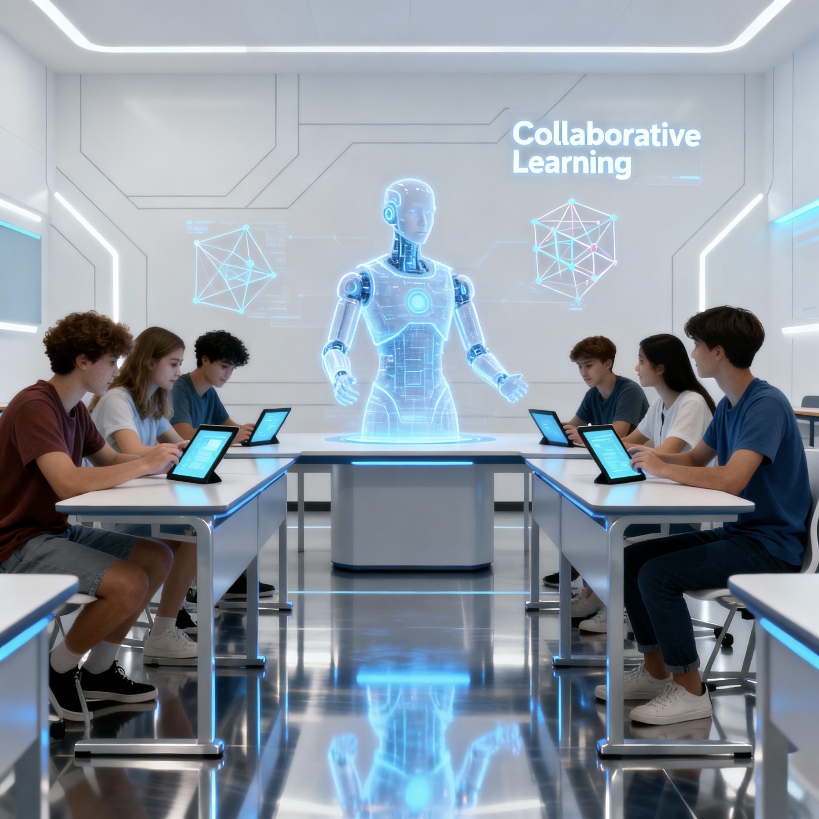
The Future of Education: How Technology Is Transforming Learning in 2025
Education has always been a driving force behind human progress. From the invention of writing to the rise of printing, each technological leap has reshaped how knowledge is shared and absorbed. Now, in 2025, we stand at another turning point. Technology is no longer just a supportive tool in classrooms—it has become the backbone of modern education, revolutionizing the way students learn, teachers teach, and institutions operate.
In this article, we will explore how technology is transforming education in 2025, the opportunities it creates, the challenges it presents, and what the future of learning may look like.
1. The Rise of Digital Classrooms
The concept of a classroom has evolved far beyond four walls. Thanks to advanced learning platforms, students can now access lessons from anywhere in the world. Digital classrooms offer:
- Interactive learning experiences with videos, quizzes, and gamified lessons.
- Global access to high-quality resources regardless of location.
- Personalized learning paths tailored to each student’s pace and interests.
Platforms like Google Classroom, Microsoft Teams, and AI-powered learning management systems have become essential in schools and universities. In 2025, hybrid learning (a blend of online and in-person education) is no longer optional—it is the new normal.
2. Artificial Intelligence as a Learning Partner
Artificial Intelligence (AI) is perhaps the most transformative force in education today. AI-powered tools help students learn smarter and faster by providing:
- Personalized tutoring: Virtual tutors available 24/7 that adapt to individual learning styles.
- Automated assessments: Faster grading and instant feedback for both students and teachers.
- Predictive analytics: Identifying students who may struggle and offering timely interventions.
For example, AI chatbots can answer student questions instantly, reducing the burden on teachers. Meanwhile, adaptive learning platforms recommend content based on a student’s strengths and weaknesses, ensuring no learner is left behind.
3. Virtual Reality (VR) and Augmented Reality (AR) in Classrooms
Imagine walking through the streets of Ancient Rome during a history class or exploring the human heart in 3D during biology. This is now possible with VR and AR technologies.
- Virtual Reality (VR) creates fully immersive environments where students can explore subjects hands-on.
- Augmented Reality (AR) overlays digital elements on the real world, turning ordinary textbooks into interactive experiences.
In 2025, VR and AR are making education more engaging and practical, bridging the gap between theory and real-world application. Medical students, for instance, can practice surgeries in a safe virtual environment, while engineering students can build and test models without costly resources.
4. The Role of Big Data in Education
Education today generates enormous amounts of data—from attendance records to online quizzes and student performance metrics. Big Data analytics helps educators make smarter decisions by:
- Tracking student progress in real time.
- Identifying learning trends and problem areas.
- Designing better curricula based on evidence.
By 2025, data-driven education ensures that schools and universities don’t just rely on guesswork but on measurable outcomes to improve teaching quality.
5. Gamification and Motivation
One of the biggest challenges in education has always been keeping students motivated. In 2025, gamification—the use of game-like elements in learning—has proven to be a game changer.
- Badges, leaderboards, and rewards encourage healthy competition.
- Interactive problem-solving builds critical thinking.
- Game-based platforms make learning fun and less stressful.
Instead of memorizing facts, students engage with subjects in meaningful ways, improving retention and creativity.
6. Education Without Borders
Technology has removed geographical barriers in learning. In 2025, students can attend lectures from world-renowned professors without leaving their hometowns. Massive Open Online Courses (MOOCs), digital universities, and micro-credential programs are booming.
This shift is democratizing education:
- Affordable access: Many online courses are free or low-cost.
- Global collaboration: Students can work on projects with peers from different countries.
- Lifelong learning: Professionals can reskill and upskill anytime, anywhere.
As industries evolve rapidly, continuous education has become essential, and technology ensures it is within everyone’s reach.
7. The Human Side of Education in a Digital World
While technology brings innovation, human connection remains irreplaceable. Teachers are no longer just sources of knowledge; they act as mentors, motivators, and guides. In 2025:
- Teachers use technology to enhance, not replace, personal interactions.
- Emotional intelligence and creativity are emphasized alongside academic skills.
- Schools focus on holistic development, ensuring that students grow not only intellectually but also socially and emotionally.
8. Challenges of Technology in Education
Despite the opportunities, technology-driven education in 2025 faces several challenges:
- Digital divide: Not every student has equal access to devices and high-speed internet.
- Data privacy concerns: Storing student information online raises security risks.
- Over-reliance on technology: Too much screen time can affect mental and physical health.
- Teacher training gaps: Not all educators are fully equipped to use advanced tools effectively.
These issues highlight the importance of balancing innovation with inclusivity and responsibility.
9. The Future: What Lies Ahead Beyond 2025
Looking beyond 2025, education will likely evolve in the following ways:
- AI-driven lifelong learning assistants guiding individuals through their careers.
- Blockchain-based certifications making academic credentials more secure and globally recognized.
- Fully immersive metaverse schools where students from around the world can learn in shared digital spaces.
- Greater emphasis on creativity, problem-solving, and human skills—areas where machines cannot compete.
The ultimate goal is not to replace human teachers but to create a balanced ecosystem where technology and people work together to unlock the full potential of every learner.
Conclusion
The future of education in 2025 is defined by innovation, accessibility, and personalization. From AI tutors and VR classrooms to global online learning, technology is reshaping how knowledge is delivered and experienced. While challenges like digital inequality and data privacy remain, the benefits far outweigh the drawbacks.
As we move forward, the key will be balance: using technology not just to make education more efficient but also to make it more human-centered, inclusive, and inspiring.
The classrooms of tomorrow are already here—and they are digital, dynamic, and designed to prepare students for a rapidly changing world.