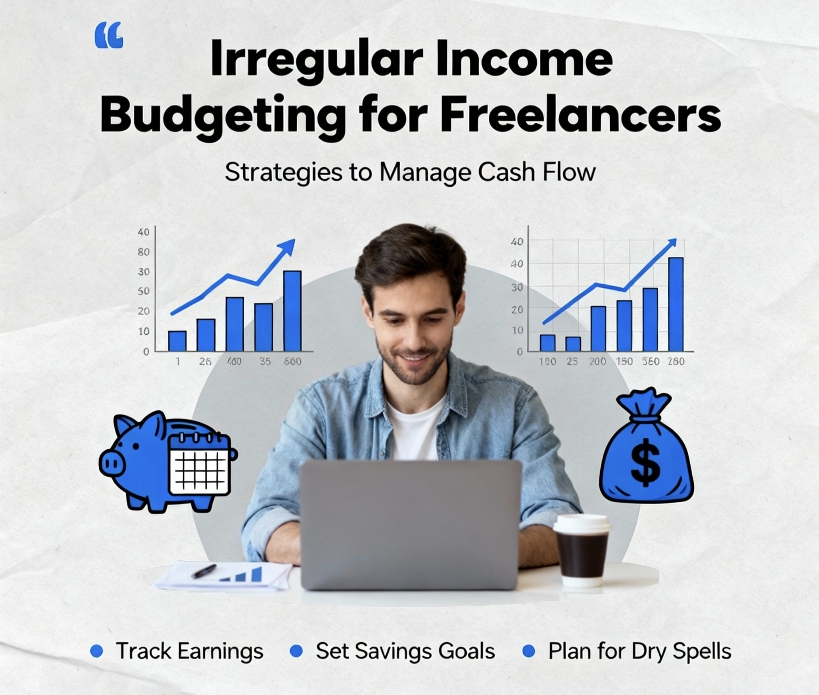
Understanding the Nature of Irregular Income
Freelancers often deal with peaks and troughs in income. Unlike salaried employees, payments can be delayed, project sizes vary, and client contracts can end abruptly. These fluctuations cause major challenges such as:
- Difficulty planning monthly expenses
- Over-spending during “high” months
- Stress during slow income periods
- Lack of savings or emergency funds
Recognizing these financial patterns is the first step toward control. The goal isn’t to eliminate income variability—but to design a system that adapts to it.
The Irregular Income Budgeting Framework
A resilient freelancer budget should adjust dynamically. This framework focuses on balance, priorities, and protection against volatility.
1. Establish a Baseline Monthly Income
Start by calculating your average monthly income from the past 6–12 months. This figure becomes your “working income” — the amount you’ll treat as regular for budgeting purposes.
Example: If your freelance earnings varied from $1,500 to $3,000 over the last year but averaged around $2,200, use $2,200 as your baseline budget amount.
2. Identify Fixed and Variable Expenses
List down all recurring costs, separating essentials (rent, groceries, utilities) from flexible expenses (entertainment, software subscriptions, dining).
Your essentials form your “bare minimum survival budget.” This helps you see exactly how much you need each month to stay afloat during low-income periods.
3. Create a Buffer Account (Income Smoothing Fund)
In high-income months, divert part of your extra money into a buffer account. This fund will supplement your income during slower months. Many freelancers find that building a buffer equal to 2–3 months of expenses provides peace of mind and stability.
4. Use the 50/30/20 Rule with Flexibility
Customize the traditional 50/30/20 budgeting rule to fit your inconsistent earnings:
- 50% for essential expenses (housing, food, utilities)
- 30% for lifestyle and professional costs (education, tools, subscriptions)
- 20% for savings, taxes, and investments
When you earn less, cut back on the 30% category and focus on the essentials and savings targets.
5. Automate Taxes and Savings
Since taxes aren’t automatically deducted from freelance earnings, set aside between 20–25% of each payment in a separate account. Automating transfers prevents tax-time panic. Similarly, automate your savings contributions—even small, regular amounts build significant reserves over time.
Case Study 1: The Freelance Designer’s Income Recovery Plan
Profile: Sarah is a freelance UX designer whose income swings between $2,000 and $6,000 monthly. Some months bring multiple projects, while others are empty due to client pauses.
Challenge:
During high-paying months, Sarah spent on new gadgets and leisure activities. When projects slowed down, she used credit cards to survive, creating debt cycles that drained her finances.
Implementation:
- Calculated her 12-month average income: $3,800
- Decided her baseline expense plan would use $3,000 as a sustainable monthly amount
- Set up a separate high-yield savings account as her income buffer
- Each time she earned more than $3,000, 40% of the excess went to her buffer
- Used surplus funds to prepay rent and recurring bills during “feast” periods
Result:
Within eight months, Sarah built a buffer of $8,500—roughly equivalent to nearly three months of income. During a dry quarter, she relied on that account instead of credit. This system reduced her financial stress and debt dependency.
Case Study 2: The Content Writer’s Predictable Workflow
Profile: Daniel writes long-form blog content for global clients. His contracts and invoices often vary in value and timing, with frequent payment delays of 30–45 days.
Challenge:
Despite earning well on average ($2,500–$4,000/month), late payments left Daniel struggling with inconsistent cash flow. He used overdrafts to cover essentials, which incurred unnecessary bank fees.
Implementation:
- Reviewed his past earnings to find a median figure: $3,000
- Created two accounts — one Operating Account (for business expenses) and one Personal Account (for home and living)
- Paid himself a “salary” of $2,500 monthly from the operating account
- Used incoming payments to replenish his operating fund
- Built a 1-month buffer to ensure he could always “pay himself” on time
Result:
After adopting the “pay yourself a salary” system, Daniel stabilized his finances. His expenses became consistent, taxes were easy to calculate, and late client payments no longer caused anxiety.
Additional Tips for Managing Irregular Income
- Track every transaction using tools like Notion, YNAB, or Google Sheets.
- Plan quarterly reviews to adjust your income averages and expense ratios.
- Save during peak seasons to prepare for lean periods typical in freelance work cycles.
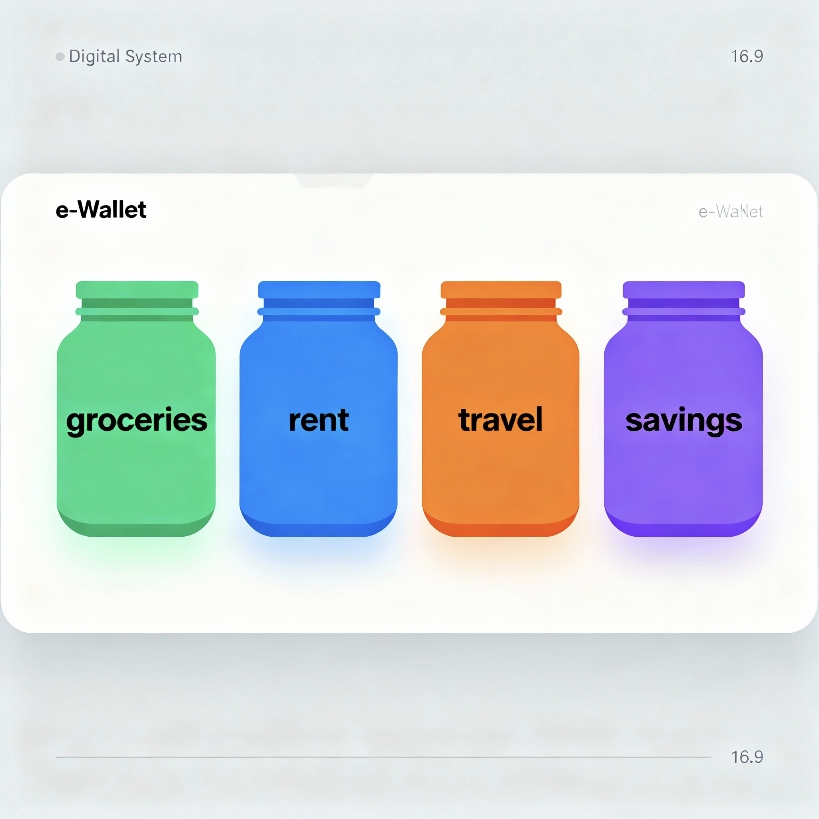
- Separate taxes, savings, and personal expenses into distinct accounts to prevent fund confusion.
- Build multiple income streams such as online courses, affiliate earnings, or templates to reduce volatility.
Conclusion: Financial Stability Through Structure
Freelance freedom comes with unpredictability, but framework-based planning turns irregularity into opportunity. By using an income buffer, controlling spending, and practicing intentional allocation, you can build lasting financial confidence.
The two case studies illustrate that consistency doesn’t require a fixed paycheck—it requires a system. Once you create a structured framework tailored to your cash flow, every project, payment, and pause can fit into your long-term financial story.
Takeaway: Treat your freelancing career like a business. Manage income strategically, pay yourself consistently, and your finances will thrive even when your income doesn’t follow the schedule.